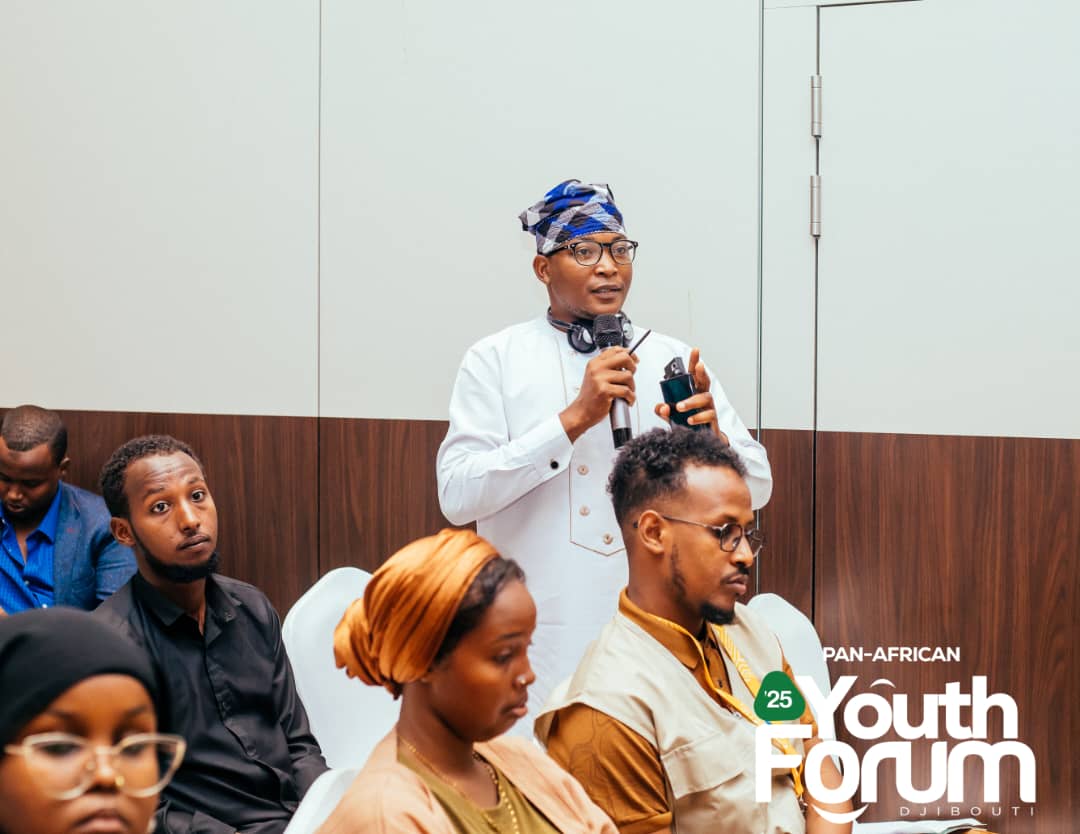
At the Pan-African Youth Forum in Djibouti, the National Coordinator of the Ghana Youth Federation (GYF), Ali Ibraheem, issued a compelling call for a complete reform of Africa’s youth councils—anchored in the Form Follows Function principle.
He argued that youth councils must evolve beyond symbolic and bureaucratic bodies into results-driven institutions that deliver measurable impact. According to Ibraheem, the future of African youth leadership lies in structures that prioritize economic empowerment and data-driven policy advocacy over protocol and politics.
His proposed reform model replaces traditional, centralized boards with specialized, expert-led units. One of the core innovations under this model is the creation of The Economic Futures Unit, envisioned as a venture builder that directly supports youth enterprises, incubates innovation, and links young entrepreneurs to investors and policy opportunities.
Ibraheem also made a strong case for leadership accountability, calling for single-term limits and the adoption of Open Source Governance—a framework that ensures transparency by making information, budgets, and decisions accessible to all stakeholders. This approach, he explained, is essential to rebuilding public trust and creating youth councils that serve as credible policy partners to governments and development agencies.
A central focus of his message was inclusion. He emphasized that youth with disabilities must not remain on the margins of Africa’s development agenda. He called for full integration of Persons with Disabilities (PWDs) in every decision-making space, stressing that inclusive governance is not charity but a right and a necessity for sustainable progress.
To make inclusion practical, Ibraheem unveiled plans for a Digital Engagement Hub—a platform that will enable decentralized participation, allowing young people across the continent, including those in remote and underserved areas, to contribute to policy dialogue and leadership decisions in real time.
He concluded with a challenge to policymakers, youth leaders, and regional bodies:
“Africa does not need more youth councils; it needs functional ones—dynamic, transparent, and inclusive councils capable of responding to the continent’s evolving realities.”
This vision echoes the broader mission of the Ghana Youth Federation, as captured in its Transitional Charter and Strategic Roadmap, which seek to build a credible, data-driven, and inclusive national youth institution in Ghana. It reflects a growing continental movement toward evidence-based youth governance, where leadership is measured not by titles but by tangible impact.
The call from Djibouti is clear—Africa’s youth structures must be re-engineered to serve their true purpose: empowering young people to lead, innovate, and transform the continent.
#AfricaYouthReform #FormFollowsFunction #DisabilityInclusion #PanAfricanYouth #YouthLeadership