The President of the Ghana Youth Federation has called for a major shift in how young people are engaged in national and international development processes.
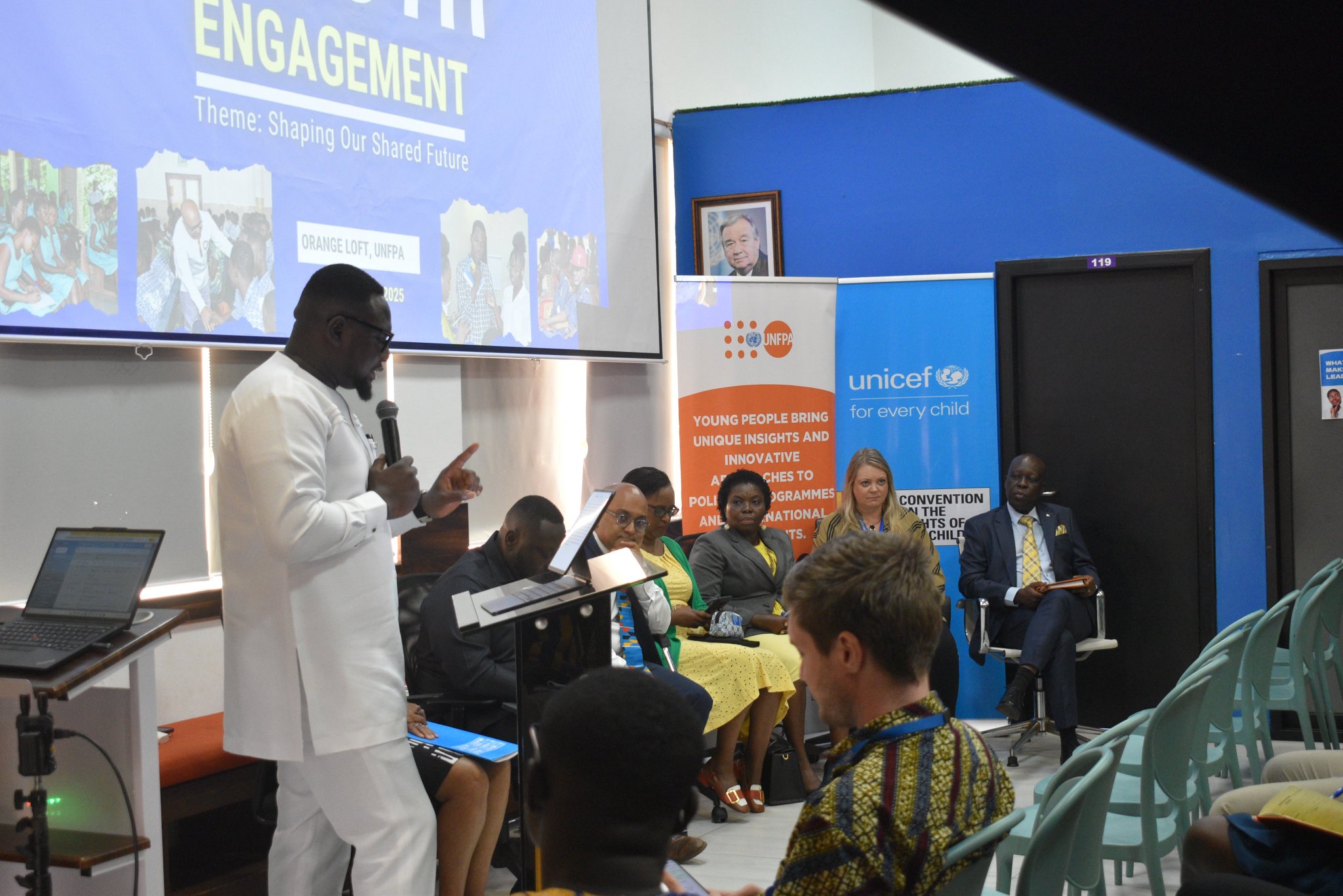
Speaking at the UN@80 Youth Engagement Dialogue in Accra, the GYF President said youth in Ghana are no longer satisfied with symbolic inclusion or one-off consultations.
The event formed part of activities marking 80 years of the United Nations.
Addressing the UN Country Team, government officials, development partners, and youth leaders, Sherif Ghali, President of the Ghana Youth Federation, said young people want to move from participation to partnership.
“Young people are not asking for more speeches or symbolic roles,” he said.
“They want systems that work. Systems that allow them to help design, deliver, and account for development outcomes.”
From speeches to systems
The GYF President said feedback gathered from youth engagements across all sixteen regions of Ghana shows a consistent pattern.
Young people want early involvement in policy design, not late-stage consultation.
They want permanent structures for engagement, not isolated events.
They want access to power, information, and resources, not visibility alone.
He stressed that youth across Ghana are already leading in entrepreneurship, civic action, innovation, and community development, but remain constrained by rigid systems and limited access to decision-making spaces.
UN amplifies youth message
After the dialogue, United Nations in Ghana shared excerpts from the GYF President’s intervention on its official social media platforms, highlighting the call for a shift from youth as beneficiaries to youth as co-architects of development.
The post drew attention to the need for system-based youth engagement rather than event-driven participation.
Why the GYF says the shift matters
According to the Ghana Youth Federation, meaningful youth engagement depends on strong institutional frameworks.
These include:
• Clear pathways for youth input into policy
• Formal roles for youth-led organisations
• Predictable funding for youth-led initiatives
• Data systems that reflect youth realities
• Accountability mechanisms that last beyond projects
Without these, the Federation says youth engagement risks remaining temporary and ineffective.
Positioning youth for Ghana’s future
Young people form a large share of Ghana’s population and play a central role in economic growth, democratic participation, and social stability.
The GYF argues that national development efforts will struggle unless youth are directly involved in shaping policies and programmes that affect their lives.
The Federation says it is ready to work with government, the United Nations, development partners, and the private sector to coordinate youth voices and support structured engagement.
As discussions continue on the future of UN engagement in Ghana, the message delivered by the GYF President was clear.
Youth are ready to lead.
The systems must be ready for them.